Sleep and Sounds

Sleep
Dr Matthew Walker’s book “Why We Sleep: The New Science of Sleep and Dreams” is a comprehensive exploration of the science behind sleep and its critical role in our health and well-being.
“Sleep is the single most effective thing we can do to reset our brain health each day — Mother Nature’s best effort yet at contra-death.”
— Matthew Walker
Walker, a neuroscientist and sleep expert, discusses how sleep affects nearly every system in the body, from the brain and immune system to metabolism and cardiovascular health.
“Sleep is not a passive activity but an active process essential for physical and mental restoration. – It plays a crucial role in memory consolidation, emotional regulation, and overall cognitive function. – Sleep deprivation can have severe consequences, from impaired judgment and reduced learning capacity to increased risk of serious health issues like heart disease, diabetes, and even early death.”
Walker explains two main types of sleep:
- REM (Rapid Eye Movement) is associated with processing emotions, dreams, and creativity.
- NREM (Non-Rapid Eye Movement) helps with physical restoration and memory consolidation.
Sleep operates in cycles, with each cycle lasting about 90 minutes, including stages of light sleep, deep sleep, and REM. – The quality and quantity of sleep are key factors in how restorative sleep is for your body and mind.
Walker highlights the dangers of sleep deprivation, showing that it’s linked to cognitive decline, mood disturbances, increased stress, and impaired decision-making. Long-term deprivation can also contribute to chronic conditions like Alzheimer’s disease.
The book critiques modern society’s sleep habits, noting that technological advances, artificial lighting, and social pressures have led to widespread sleep deprivation. – Walker calls for cultural and environmental changes to promote better sleep.
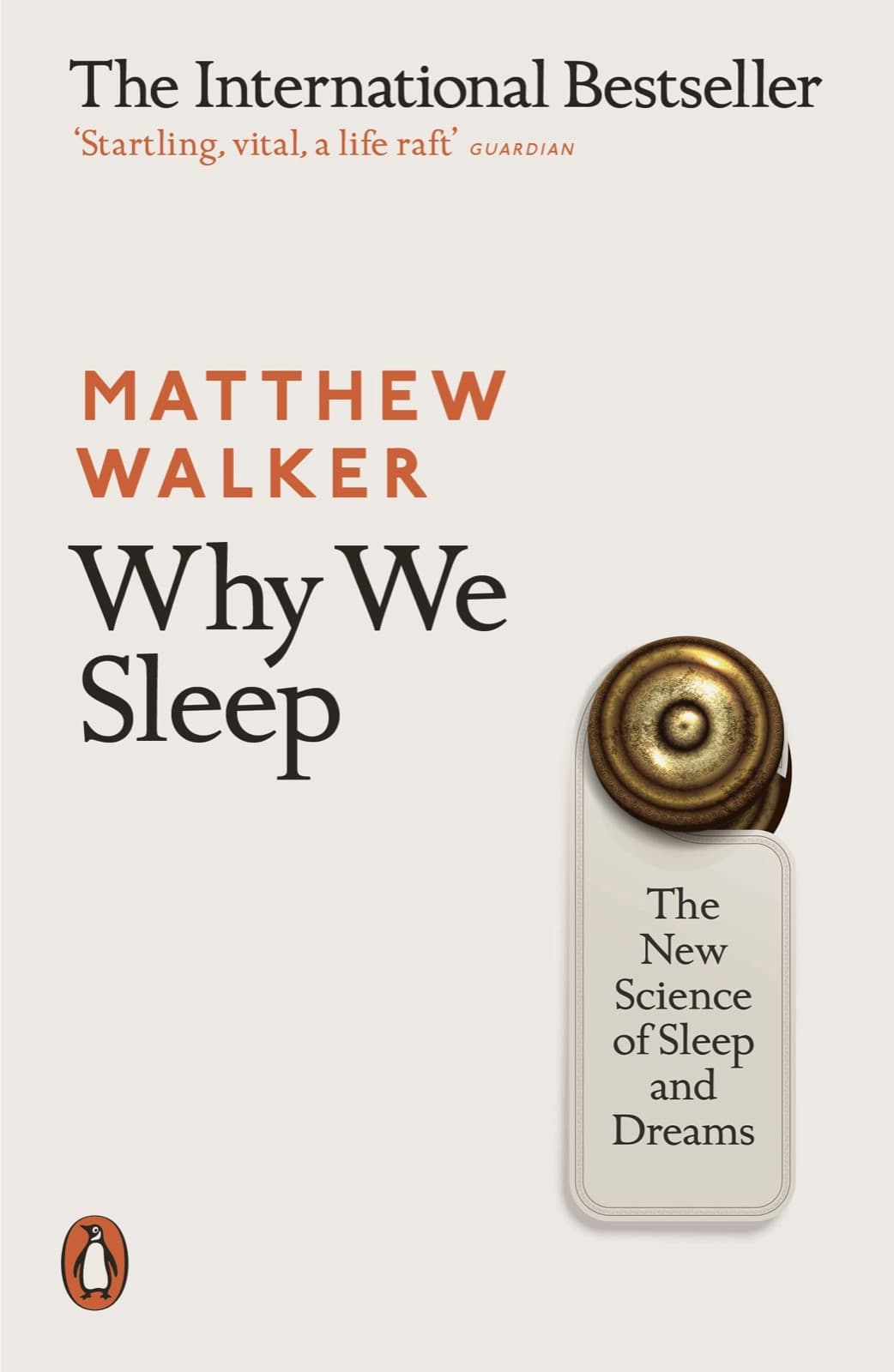
Dr Matthew Walker’s
tips for improving sleep quality
Adhering to a daily sleep schedule can be highly beneficial for your overall health and well-being.
Develop a bedtime routine. Nightly rituals can lead to better sleep. Try doing the same thing at bedtime every night. This might involve taking a bath, drinking hot tea, or listening to relaxing music. You can train your body to associate bedtime rituals with sleep onset.
Dim the lights at night. Your body clock reacts to light exposure. Bright lights inhibit the body’s release of melatonin, a natural hormone that brings on sleepiness. For a good night’s sleep, consider dimming lights in the hour leading up to bedtime.
Limit screen time before bed. The blue light emitted by cell phones and other electronic devices can disrupt your body clock. Put away devices an hour before bed, or at least use a blue light filter on your screen.
Lower the temperature of your bedroom. A nighttime room temperature of 60 to 67 degrees Fahrenheit is optimal for sleep. A lower room temperature leads to a lower body temperature, which signals to your brain that it’s time to sleep.
Minimize disruptions in your sleep space. If possible, equip your bedroom with blackout curtains, and consider sleeping with earplugs or using a white noise machine to block out nighttime sounds. This can particularly benefit those who work night shifts and must get the bulk of their sleep during busy daylight hours.

Dr Matthew Walker’s
tips for improving sleep quality
Aim to finish heavy exercise two to three hours before bed.
Reduce caffeine and nicotine/vape chemical consumption to prevent blocking a crucial chemical in the brain (adenosine) or to prevent very light sleep due to too much nicotine in your system.
Keep alcohol to a minimum. Alcohol robs you of REM sleep—the deep slumber your brain requires for optimal restoration. Heavy alcohol consumption can also impair your breathing at night and isn’t good for staying asleep, either (you tend to wake up multiple times, even if you don’t remember doing so).
Eat light at night. Heavy meals can cause indigestion that interferes with your sleep. Avoid drinking fluids a couple of hours before bedtime to prevent frequent bathroom trips in the middle of the night, interrupting sleep, which can lead to fragmented sleep.
Talk to your doctor about your medication schedule. Some heart and lung medications, and over-the-counter cold and allergy drugs, can disrupt sleep patterns. If you have trouble sleeping, ask your health-care provider or pharmacist if medication may be the culprit—and whether you can take them earlier in the day. Consider a more natural approach to your healthcare. Herbs and essential oils have been shown to help and without side effects.
Leave time to unwind. Create a relaxing routine before bed—like reading, listening to music, or doing light stretching. A gratitude journal is also a lovely way of going to sleep with an open heart and peaceful mind.
Have a bath. Taking a hot bath before bed can drop your body temperature once you’re in bed, in addition to making you feel sleepier and more relaxed. Use Epsom Salts to help with detoxing and some drops of lavender to help you relax.
Check your devices at the door. Keep all devices switched off and preferably charging in another room. Switch off Wi-Fi, especially if it is near or below your bedroom.
Get some sun. Exposing yourself to natural sunlight for at least 30 minutes a day can help regulate your sleep patterns. Aim to catch those rays in the morning, which can make you more alert as you start your day. Also, turn the lights down before bedtime to avoid disrupting melatonin production.
Avoid lying in bed for too long. Lying in bed for prolonged periods, hoping you’ll finally nod off, isn’t an ineffective sleep strategy. Get up and do a relaxing activity until you start feeling sleepy.

Sound
Sound plays a fundamental role in our communication, entertainment, and understanding of the world. At its core, sound is a vibration that travels through the air or other mediums, reaching our ears and allowing us to hear. But there’s more to sound than meets the ear…
Sound is not just an aspect of our daily lives; it holds a special place in medicine, offering innovative ways to diagnose, treat, and understand the human body. While most people are familiar with the use of sound waves in ultrasound imaging, the application of sound in medicine extends far beyond, touching on areas as diverse as therapy and surgical treatment.
(Yianni Kiromitis 30/09/2024)
Dr Conny Lerch: Sound Healing
Dr Lerch is a Consultant Anaesthetist at the Royal Orthopaedic Hospital Birmingham, UK, and a qualified sound healing practitioner with a diploma in Integral Sound Healing from The Sound Healing Academy.
This is a unique and refreshing combination and with this lens, Dr Lerch highlights the need for 3 types of early intervention and causative treatments for a more holistic approach to healthcare:
- prevention
- prophylaxis
- pre-habilitation
She believes that the implementation of these can greatly minimise the use of more advanced hi-tech, costly treatments. Dr Lerch also believes that sound healing is an adjunct to any modern medicine, empowering carers, doctors, and nurses to create an appropriate environment in hospitals for healing.

‘Sound healing is the future of medicine’
— Dr Conny Lerch
Cymatics
Cymatics is the study of visible sound and vibration, typically using a medium like sand, liquid, or powder, which is subjected to sound frequencies. When vibrations are applied to the surface of the medium, they cause patterns to form that visually represent the sound waves. These patterns can reveal the intricate ways sound interacts with physical matter.
The patterns that form are often highly symmetrical and can vary depending on the frequency or tone of the sound. Cymatics is not only visually fascinating but has also been used to explore how sound affects matter in areas like music, art, biology, and even the study of consciousness.
The work of Veda Austin and Masaru Emoto show that the vibration of emotions creates certain patterns in water. We have also seen that these emotions can be held, metaphysically, in certain tissues in the body. Is it possible, therefore, to see how crucial it is to maintain a high vibrational frequency through the right food, movement, a peaceful mind, good sleep, love and connection, adaptability, hydration, renewing emotions and limited toxins to achieve health and coherence?