Acid or Alkaline and Axes

Acid or Alkaline
Well-balanced acid-alkaline levels are crucial to our health. For only when these are balanced is the metabolism able to function optimally.
The body has an underlying endeavor to keep its physiological functions in balance at all times. In medical terms, this is referred to as homeostasis. For this to happen, it is vital that the kidneys, lungs, blood and liver are functioning properly.
It also takes energy for this to happen. Therefore, when there is an imbalance, your energy levels become depleted.
It is like having too many apps open on your phone, draining the battery, due to inefficiencies, deficiencies and toxin load.
The following symptoms can be a sign that the acid-alkaline levels are out of balance. If you discover that you have one or more of these symptoms over a prolonged period of time, you should pay attention and scrutinize your lifestyle (in particular your nutrition) with regard to its acid-alkaline balance.
1. Tiredness and Lethargy
As explained above
2. Pain:
Pain is always caused by inflammation, which is red, hot and often swollen. It is more obvious when this is happening in the joints of the body with external physical symptoms to see. However, it can also be happening inside the body too. This occurs when the body is too acidic. If it is occurring in the organs of the body (often in the gut) it may present as other symptoms like digestive issues, flatulence, constipation, diarrhoea or severe headaches.
3. Problems with the Mouth, Skin, Hair or Nails:
If, for example, the body is deficient in iron or zinc, it draws these nutrients from the hair and nails. However, the nutrients are then lacking in these places, causing white spots or ridges in the nails or a loss of hair.
If the tongue is coated, you develop ulcers in the mouth or stubborn cracked corners of the mouth become apparent, these may be signs that your acid-alkaline levels are off balance. In addition, dull or brittle hair or hair loss also indicate that something is not quite right in the body.
Additionally, dry, scaly, sore or bumpy patches on the skin also indicate the likelihood of an imbalanced acid-alkaline levels. If such symptoms appear, the body’s compensation mechanisms work hard to restore a balance.
4. Unbalanced Blood Levels
If acid levels are high, it can lead to an accelerated heart beat, dizziness, nausea, vomiting, sweet smelling breath (as in Type II Diabetes), and shortness of breath.
If we think of a swimming pool, it is imperative to maintain the correct pH for clean water that doesn’t cause swimmers to become unwell.
If it becomes too acidic, the pipes corrode.
If it becomes to alkaline, algae grows in the water and it turns green.
Given that we are made up of over 70% water, this picture helps us to understand how crucial it is to maintain a good balance.
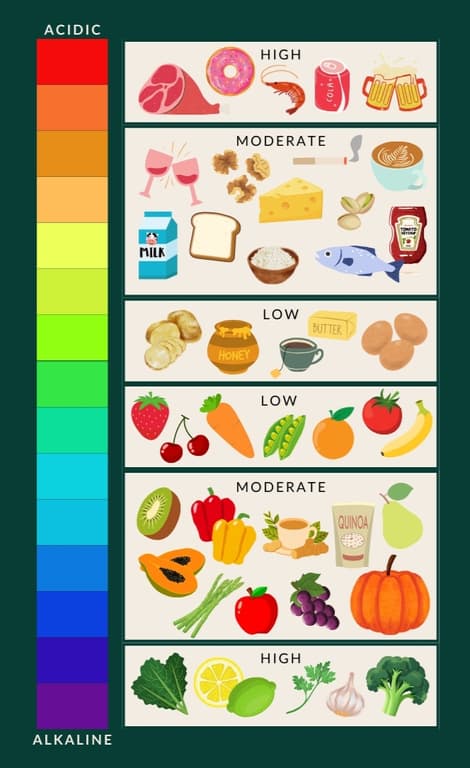
The foods we consume range across the acid-base spectrum.
To remain well, we should aim for a ratio of 80%/20% alkaline/acid intake.
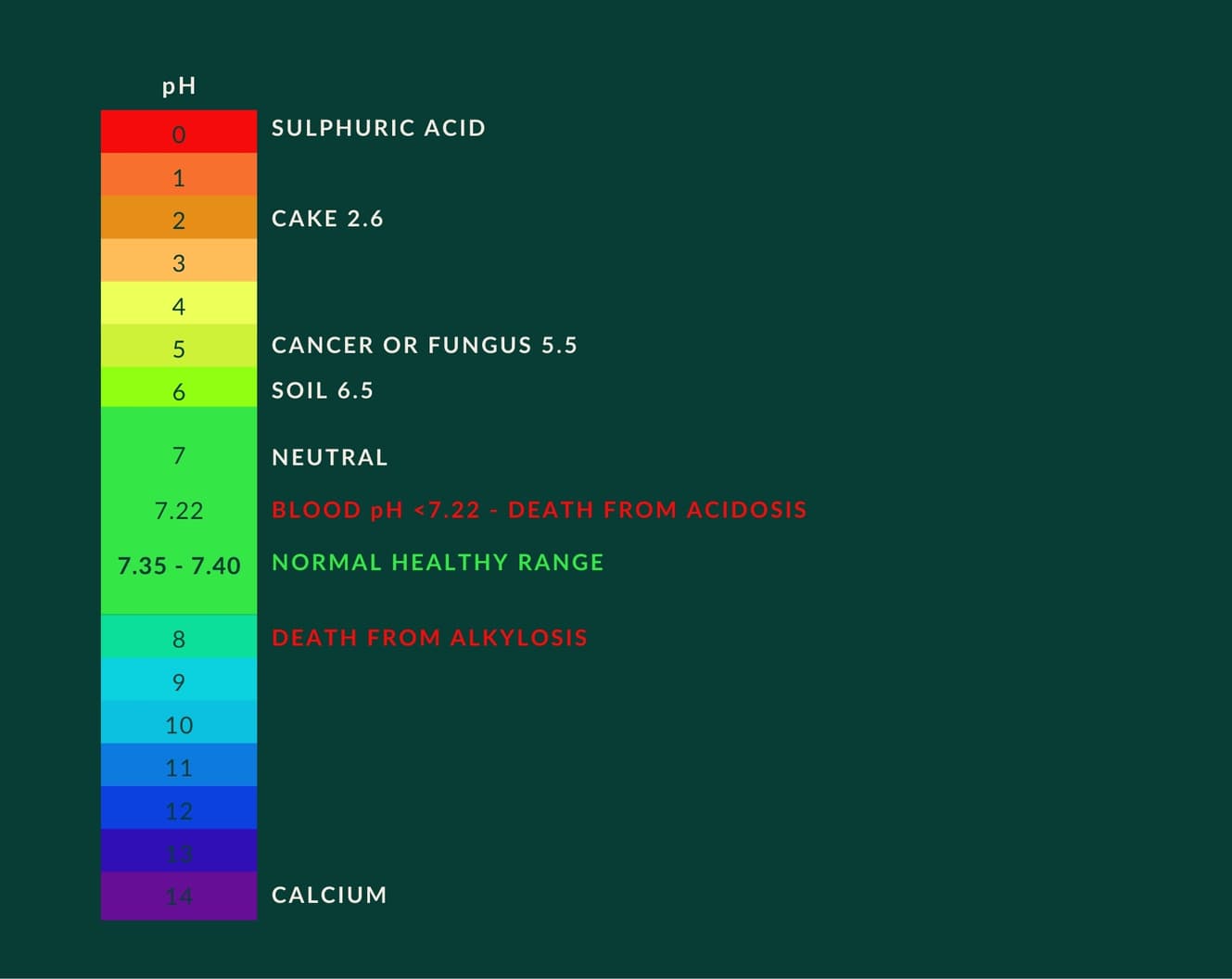
A simple urine test will determine your acid-base balance.
Axes
Chronic disease is not an end state but the expression of insufficient adaptability.
It manifests primarily in the Central Nervous System, Immune System and Metabolism.
These egoistic systems are not only independent in their own function but also influence energy distribution and have memory.
Bio-energetically, we can consider there to be several axes in our bodies. This helps us to understand the parts versus the whole picture in each connection possible.
(Descriptions courtesy of Mechthild Rex-Najuch)
How do we define an axis?

In Physics
1. The straight line around which a rotation is performed
2. Mathematically formulated, the set of all points that remain in place (invariant) during rotation, for example, the Earth’s axis.
In Medicine
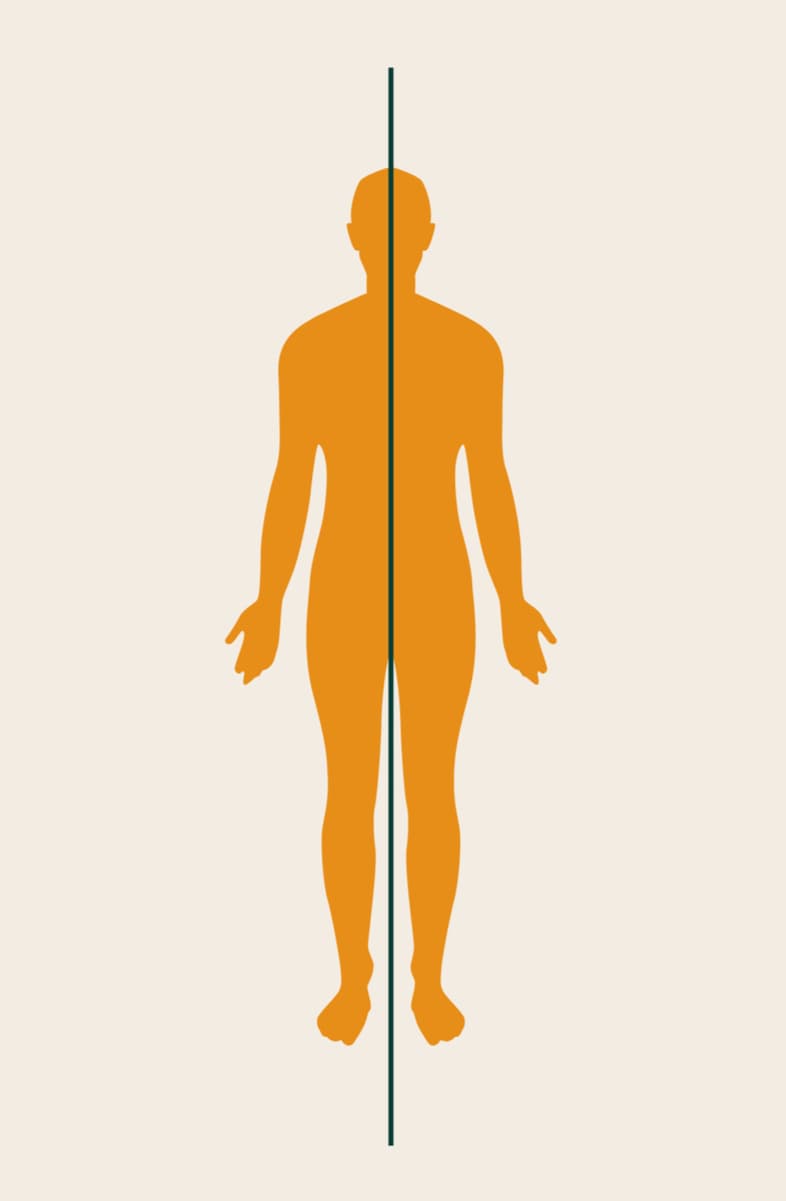
A real or imaginary line that runs through the centre of a body or around which a part rotates.
For example: the axis (C2 spinal vertebra) allows us to rotate the head around the axis of the rest of the spine.
There are communications that cross the ‘central line’ via the fascia, lymph, tissues and vessels. Additionally, it can be a connection between 2 organs.
In research, axes might be used to pose questions like:
- How do organs influence the brain?
- Investigation of neuronal networks
- What is the impact of the microbiome?
- What is the impact of behaviour on the microbiome?
To optimise our health, it is important to have an overview, cooperation, and coherence in a number of axes in the body. When we don’t, the body wastes energy, meaning that repair and our true potential health is more difficult to achieve.
What disrupts the axis in the body?
1. Stresses and Strains slows down, speeds up, prevents or alters the physiological processes of the body.
2. Toxic load from chemicals in processed food and drink, environmental toxins, pesticides and herbicides, flouride and chlorine in the water, an imbalance in microorganisms and their excretions, metabolic products, alcohol, tobacco.
3. A burden or over abundance from quantitative and qualitative shifts of microorganisms (virus, bacteria, parasites/fungi)
4. Radiation exposure – Natural radiation and blue light, Artificial radiation / electric smog, cosmic radiation and radioactivity
5. Rhythmic Load – biological rhythms, lack of sleep, acoustic, optical or mechanical disruptors
6. Physical Load – Injuries, trauma or scars, physical abnormal changes
7. Stress caused by the disease or condition itself – affecting mental or physical wellbeing
8. Environmental stress – In our private lives, in our professional lives or societal pressures to conform
9. Psychological stress – How you feel about oneself, relationships with others, media exposure preventing you from remembering who you are before the world told you who you should be.
10. Toxicosis – organs, scars, inflammation, mechanical pressure in the bite or joints
11. Epigenetic Stress – passed from parents, grandparents, current lifestyle
Global Diagnostics (HILDA) Axes
Holler Medizintechnik
How can we make things better?
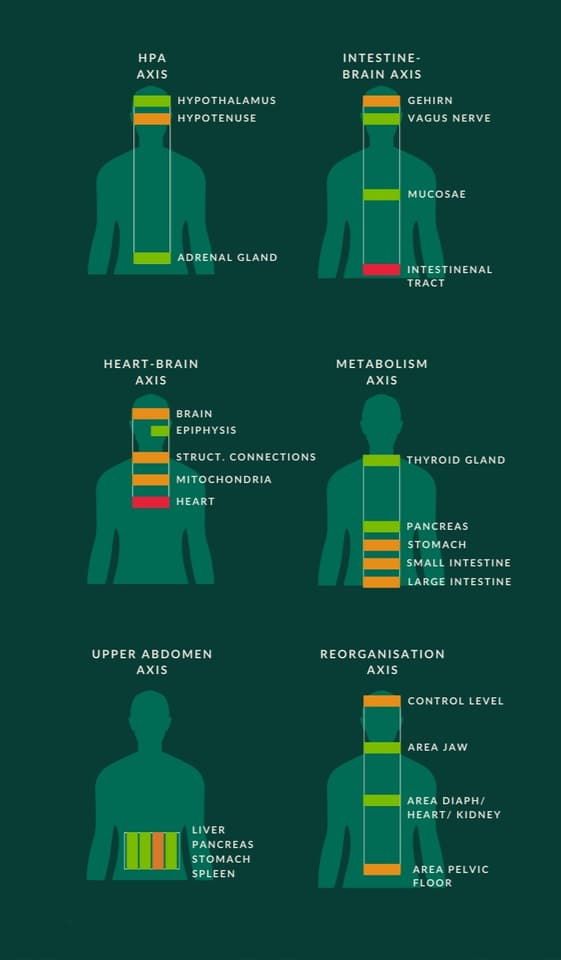
Using the Vitatec Global Diagnostics Machine (HILDA) we can measure and treat the function and coordination of the following axes to optimise health.
- 1. Hypothalamus-Pituitary-Adrenal (HPA) Axis
- 2. Upper Abdomen Axis (Liver stomach, spleen pancreas)
- 3. Reorganisation Axis
- 4. Gut-Brain Axis
- 5. Heart-Brain Axis
- 6. Metabolism Axis