Tension, Thoughts and Trauma

Tension
The philosophies of Osteopathy and Somatic Education share some common ideas.
When there is tension in the mind or body, there is dysfunction. Dysfunction causes decreased blood flow, restricted lymphatic drainage and altered nerve supply, thus affecting the health, possibly leading to disease.
Both Andrew Taylor Still and Thomas Hanna advocated the ability to self-monitor, self-heal and self-repair. If tension is removed in the mind and body, health will ensue. This can be achieved with the help of Osteopathic treatment and Somatics as well as many other therapies.
A.T. Still, From the Dry Bone to the Living Man
An excerpt from the book by John Lewis:
“Still teaches that disease is the physiological effect of anatomical derangements (primary osteopathic lesions from trauma or strains or secondary lesions manifesting in the structure from environmental or other influences). Normalizing deranged anatomy restores normal physiology because of the complementary, spiritual, principle that nature constantly strives towards health. Every cell will maximize its potential for health only with an unimpeded blood circulation, so the role of the doctor is to free the arteries and veins and their controlling nerves by normalizing the body structure, often in extremely small, subtle ways. Find, fix it, and leave it alone. Nature will do the rest.”
“Still was not introducing a manual therapy for a narrow range of musculoskeletal complaints. He was presenting a new paradigm for health, a new philosophy that can be universally applied. We are not islands but parts of nature, parts of the whole, and nature’s laws are absolute and unchanging. ‘It is my hope and wish’, he wrote, ‘that every osteopath will go on and on in search for scientific facts as they relate to the human mechanism and health.’ Within the philosophy there are 4 principles, taught during Osteopathy courses: the body is a unit; the body possesses self-regulatory mechanisms; structure and function are reciprocally interrelated; rational treatment is based upon these principles.”
“The Native American view is ‘we are all related.’ Human beings have relationships with animals, insects, trees, plants, water, air, wind, the seasons, sun and sky, food, medical drugs and all else – and our health and happiness are affected positively or negatively by everything we interact with. Similarly in the human ecosystem, a microcosm of universal laws: every cell is in mutual dependence with every other; and the physiology of the whole organism is profoundly affected by thoughts, emotions, foods, medical drugs, and myriad other things. Nothing is isolated. To recognize these interconnections is to start to understand osteopathy. And perhaps we also need the Indian teaching that if we do not acknowledge the relationships between things we do not feel the need to respect things.”
Further information can be found in ‘Interface’ — a book by Paul Lee, DO.

Supporting Evidence
The above information regarding toxins and our terrain, provides a good reason to maintain ease of movement, a peaceful mind and good breathing mechanics to help our bodies remain in homeostasis and health.
Thoughts
Do you find that your mind is always busy and it is difficult to switch off?
Would you like to know a simple, effective and evidence-based way of having a more peaceful mind?
Did you know that we create our own suffering by the thoughts we generate around things that happen?
What if we change that old habit to a new way of being?
Eckhart Tolle talks about compulsive thoughts and labelling being like an addiction.
Some people shop, some people drink, some smoke, some take recreational drugs and some over think to the point where it starts to have a physical effect on their lives and their relationships.
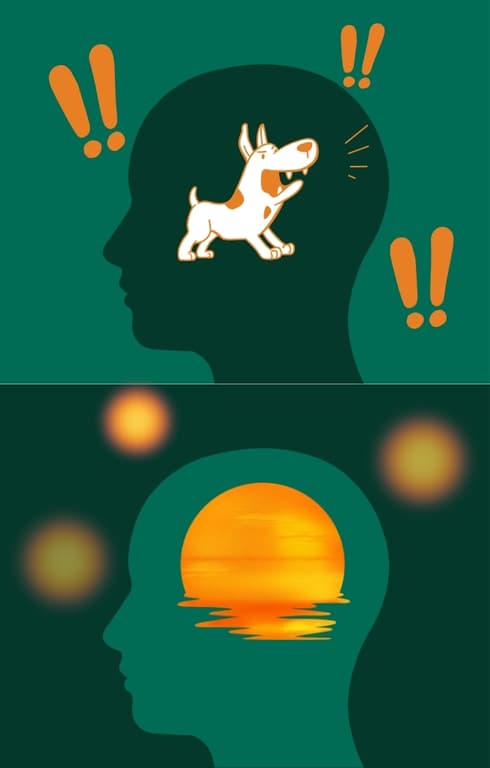
Sonia Choquette teaches us to name the ‘yappy dog’ in our heads, and to connect into a place in the body, where your true essence can shine. This can be given a name too.
There is a wealth of evidence to support the fact that if we connect into our body and breath, the thoughts in our head automatically go quiet – like pressing the off switch.
We get good at what we practise. If we practise continuous stories and thoughts in our head, that’s all we will know.
If we practise and get good at connecting into our bodies and the way we breathe, our minds go quiet, our tension eases, we live in and enjoy the present moment. Somatics helps us to do that as do the resources shown below.
Doesn’t that sound like a better way to spend your day?
Supporting Evidence

Sonia Choquette On How To Tune Into And Trust Your Intuition
Trauma
Having experienced and studied trauma, the work of the following leaders in this field has resonated the most.
Their work sits beautifully with Osteopathic philosophy and principles, Somatics, HeartMath Resilient Heart and the Vitalfield training.
Dr Peter Levine
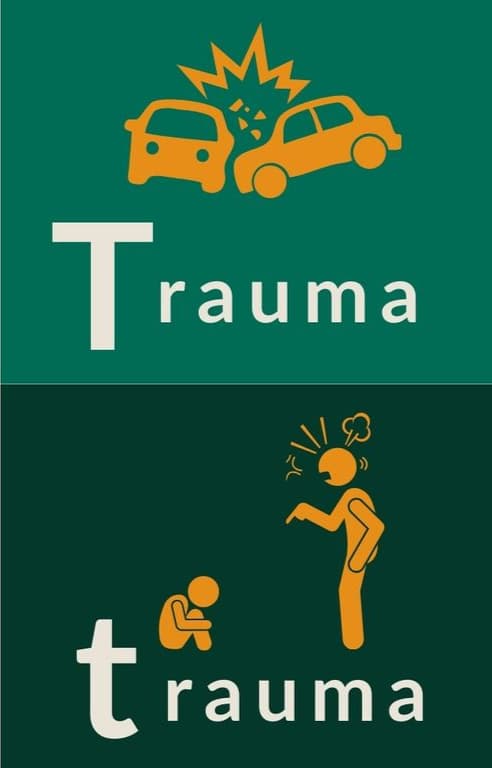
Dr Peter Levine developed a protocol called Somatic Experiencing. It is a body-based therapeutic approach to healing trauma. His work centres around the idea that trauma is not just a psychological experience but also deeply impacts the body and nervous system.
Levine suggests that trauma occurs when an individual is overwhelmed by stress or danger and is unable to fully process the experience.
He describes how trauma affects the autonomic nervous system, particularly the sympathetic (fight or flight) and parasympathetic (rest and digest) systems. When someone experiences trauma, their body can get “stuck” in a hyper-aroused state (sympathetic overactivation) or a hypo-aroused state (parasympathetic shutdown, also known as “freeze”).
Trauma, then, is not just a mental or emotional issue but is stored in the nervous system and the body itself. It is thought that traditional talking therapies might not always be effective on its own (and sometimes make things worse by reliving the details of the trauma)—healing requires accessing and releasing the physiological and somatic aspects of trauma.
Somatic Experiencing focuses on helping individuals “tune into” their bodily sensations to process and release traumatic energy that is trapped in the body. By carefully tracking bodily sensations and noticing when tension, pain, or other stress responses arise, individuals can gradually process trauma in a gentle and controlled way. SE helps to restore a sense of self-regulation and safety in the body, allowing individuals to complete “unfinished” survival responses (like running, fighting, or fleeing) that were never fully expressed at the time of the trauma.
Similarly, Somatics movements helps us to re-educate the body and central nervous system to remember the connection to the body. If we can sense tension, discomfort, reduced movement and held emotions, we can use the movements to remember the potential and to move and live with ease.
Dr Stephen Porges
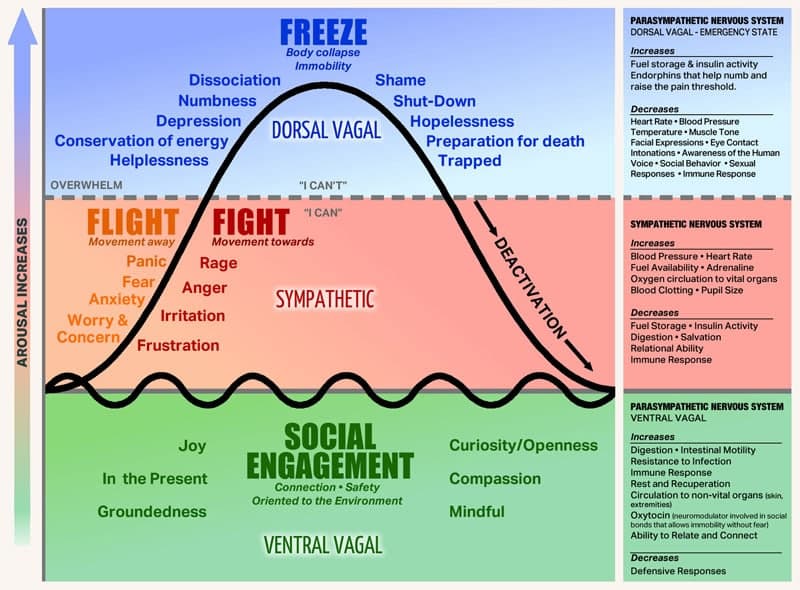
Stephen Porges is best known for his Polyvagal Theory, which has had a significant influence on understanding trauma and its impact on the nervous system.
His work explores the relationship between the brain, autonomic nervous system, and emotional regulation. Like Dr Peter Levine, Porges’ theory highlights how trauma can affect our physiological responses, particularly how our bodies react to stress and threat.
The Vagus nerve is a key component of the parasympathetic nervous system and is central to Porges’ work. It regulates many of the body’s involuntary processes like heart rate, digestion, and respiratory rate. Polyvagal Theory posits that the Vagus nerve plays a crucial role in our social engagement and stress response systems in the body.
Porges describes three primary states of the autonomic nervous system:
1. Social Engagement - A calm state where we feel safe and connected with others. This is regulated by the “Ventral Vagal” pathway of the Vagus nerve.
2. Fight or Flight - The sympathetic nervous system activates in response to perceived threats, preparing the body for action (increased heart rate, rapid breathing, etc.).
3. Freeze or shut down - The Dorsal Vagal pathway can activate during overwhelming stress, leading to dissociation, numbness, or immobilization in extreme cases (this is often linked to trauma responses).
In the context of trauma, the autonomic nervous system may become stuck in the fight/flight or freeze/shutdown modes, preventing individuals from returning to a state of safety and social engagement.
Porges explains that trauma disrupts regulation, especially early-life trauma. It can impair the nervous system’s ability to regulate itself. When the system is stuck in a state of heightened alert (fight/flight) or dissociation (freeze), it prevents a person from engaging socially, feeling safe, or processing emotions. He refers to this as Vagal Tone.
Dr Gabor Maté
Gabor Maté is a renowned physician and expert on trauma, addiction, and mental health. His work focuses on the deep connections between trauma, the body, and the mind, and how early experiences shape our physical and emotional well-being throughout life.
Maté defines trauma not as an event itself, but as the “internal emotional response” to an event. It’s about how overwhelming experiences, particularly in childhood, are handled by the individual. It is this emotional response that explains why two people can experience the same event but have different responses to it.
Trauma doesn’t have to be a violent or extreme event; it can be something as subtle as emotional neglect or chronic stress, especially in early childhood as this is the most critical period for emotional and psychological development. When a child’s emotional needs are not met, or they experience stress (even from a lack of secure attachment or consistent nurturing), this can shape their coping mechanisms and health later in life.
Maté emphasises that trauma, especially unresolved childhood trauma, has a direct impact on physical health. Chronic stress and emotional wounds can manifest as physical conditions like autoimmune diseases, cancer, heart disease, and mental health conditions. He highlights how disconnection from the body is a common result of trauma. People who have suffered from early trauma often disconnect from their bodies to cope, which can contribute to chronic pain, illness, and emotional dysregulation.
When someone is in a constant state of stress or fear (due to trauma), their nervous system remains activated, causing ongoing physiological effects like inflammation, hormonal imbalance, and weakened immune function. His and others research shows ‘the body keeps the score’ which is similar to what Bessel van der Kolk discusses in his work. Maté, however, focuses heavily on the somatic effects of trauma.
Bessel van der Kolk
Bessel van der Kolk is a renowned psychiatrist and researcher who has extensively studied the effects of trauma on the brain and body. His work has been foundational in understanding how traumatic experiences, particularly early life trauma, shape a person’s mental and physical health. His most famous book, ‘The Body Keeps the Score: Brain, Mind, and Body in the Healing of Trauma’, is a comprehensive exploration of trauma’s effects and how to treat it.
As with Levine, Porges and Maté, Van der Kolk argues that trauma profoundly impacts the brain, particularly areas responsible for memory, emotional regulation, and bodily sensations. He explains that trauma can alter the brain’s structure and function, particularly the hippocampus, prefrontal cortex, and amygdala. These changes make it difficult for survivors to process and integrate traumatic memories, leading to persistent symptoms like flashbacks, emotional dysregulation, and hypervigilance.
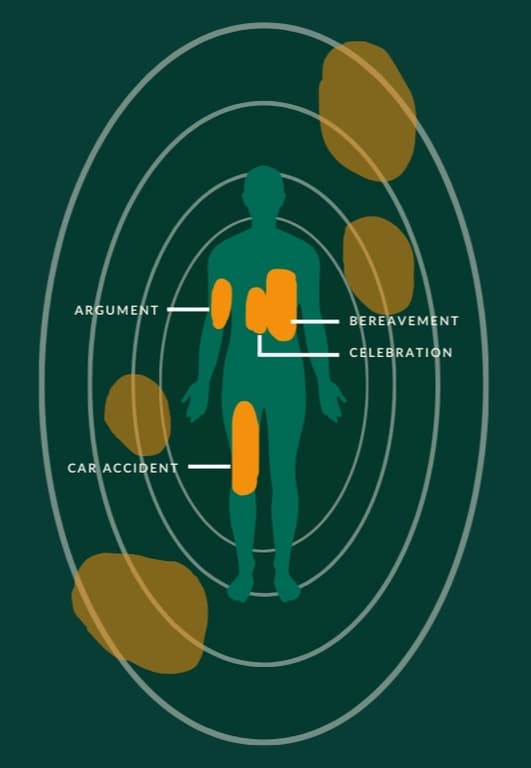
One of van der Kolk’s major contributions is the idea that trauma is stored in the body. He emphasizes that physical sensations and unresolved physical trauma can manifest in mental health symptoms. For example, the body may continue to react as if the trauma is still happening, leading to conditions like chronic pain, autoimmune disorders, and other somatic symptoms. If a person compulsively remembers or thinks about the traumatic event(s), the brain cannot determine time and therefore the response of the brain and nervous system is as if it is happening at that moment.
Van der Kolk concurs that traumatic events often lead to dissociation, where individuals may feel disconnected from their bodies or have fragmented memories. This dissociation is a survival mechanism in response to overwhelming events but complicates the ability to process and integrate the trauma later on.
In his work, van der Kolk also explores the role of attachment in trauma. Early childhood trauma, such as neglect or abuse, can disrupt the development of secure attachment relationships. This can lead to long-term difficulties in forming healthy relationships, managing emotions, and regulating the body.
Solutions
Somatics, Osteopathy, HeartMath Breathing techniques and Vitalfield work are all able to help the person to find a greater window of tolerance, to regulate, to ease the Vagal Tone and to overcome old traumatic patterns.
Therapies that support body work such as Havening, Emotional Freedom Technique (EFT), EMDR, Somatics, HeartMath Sensor technology all have evidence for their efficacy. It also addresses the cause rather than dumbing down the symptoms accompanied by potential side effects.

Supporting Evidence
Healing Trauma: A Pioneering Program for Restoring the Wisdom of Your Body
Gabor Maté Books:
Hold on to Your Kids
In the Realm of the Hungry Ghosts
Scattered Minds